


EDUCATION & LEADERSHIP
General Henry H ‘Hap’ Arnold was an aviation pioneer who led the US Airforce. In August 1945 he set an interesting example of leadership that is still mentioned, eighty years later. During an exceptionally turbulent flight over the Mariana Islands, his head remained buried in a novel, apparently oblivious to the crew’s efforts to save the plane. The situation, he explained afterwards, involved masking infectious fear (he was terrified) from the crew and not getting in their way.
Leadership is so encompassing that the very word “education” – by far the chief occupation of childhood – is a direct derivation of it, so tactically important, so sensitised to human responses that when not to lead should be a conscious decision as when to lead. The general also understood how leadership brings control that, when negatively applied may have catastrophic consequences. Hence the need for education to be entirely positive, respectful and adapted to the context at hand.
This requirement of nurturing positivity is evident from the word’s Latin origins: educare (“to bring out”) and ducere (“to lead, guide, consider”). Ducere shares roots with lux (light). In Sanskrit, the root dhoti means both “light” and “radiance.” The German verb leiten – meaning “to lead” or “to guide” – is also used to mean “to conduct,” as in conducting electricity. From leiten, we derive the word leader.
EDUCATION & FEAR
True leadership has rare power to dispel the fears that obstruct pathways to academic truths. No finer example presents itself than the fear of AI.
AI should be positively and massively transformative; and benign. As with all machines, computers are not possessed of genuine intelligence – at all. Yet AI is described as a species-threatening force. The reality is that microchips struggle with nuances of language and drawing meaningful connections between unrelated ideas – processes where humans excel. Is AI an artifice of intelligence? Perhaps. Independent thinking? No. Controllable? Yes. Fearful? Most innovations provoke fear when new. The first train passengers were thought to be at mortal risk by travelling at speeds over 40 mph. Over time, we adapt and manage risk, safely.
Nonetheless, how to distinguish real threats from exaggerated fears is a great challenge of our times. Technology may eventually resolve the problems it creates. Until then, learners should be led, gently, to scrutinise the veracity of digital content. We must involve children in the current technological revolution with care, leading them away from the strange scaremongering of screen-based obsessions and the superficial yet dangerous manipulability of digitalised, two dimensional views.
EDUCATION & INCLUSIVITY
Education can be idealistic and realistic; academic and practical. Here, climate change is an interesting example.
Sufficient carbon reduction is economically unviable until clean energy solutions are deliverable for all. And clean energy is a major career interest. Educators may strengthen the academic foundations necessary for children to participate in the culture of scientific innovation and discovery that protects humanity, as it always has done.
And education leaders must protect their fellow educators. Honest scientific exploration must not attract opprobrium.The dominant narrative has a habit of resisting broader understandings of long-term climate patterns, such as the influence of solar activity, or our gradual emergence from an ice age. A key example: atmospheric carbon dioxide levels rise after warming events, raising complex questions about cause versus effect. Dissenting scientists must not be cancelled for drawing attention to them.
EDUCATION & POSITIVE AIMS
How to educate now overrides what to teach. AI is more efficient at performing a rapidly escalating suite of tasks by which education has set great store, from essays to calculations.While these tasks or objectives soon may change beyond recognition, the qualities that educators aim to instil are resoundingly positive constants.
Confidence
While children need shelter from extreme conjecture, they also deserve a positive, clear-eyed appreciation of the good that exists in the world – and, critically, within themselves. Confidence is akin to hope.
Hope
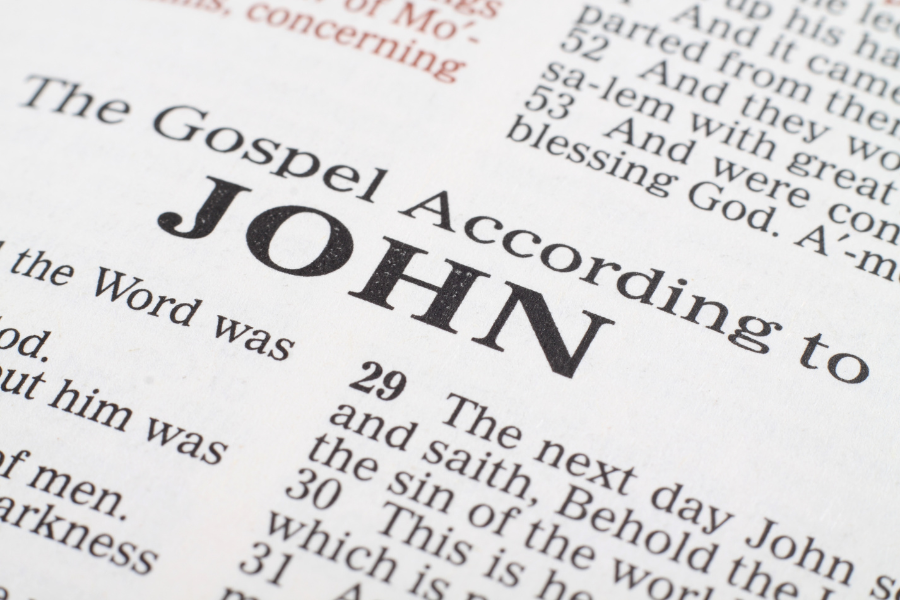
Fear is a knee jerk-reaction to even the most positive unknowns. Nowhere is this expressed with more symmetrical concision than in John 1:5: “Lux in tenebris lucet et tenebrae eam non comprehenderunt.” (“The light shone in the darkness, and the darkness did not understand it.”) John, or whoever wrote this poetic synthesis of Hebrew theology and Greek reasoning, recognised the beauty of applying academic discipline to the sacred, circular paradox of finding hope where there is fear and light where there is hope.
Moderation
The challenge of educating should be promoted with positivity and hope. Instead, impressionable minds that not so long ago were engrained with the prospect of being sent to Hell are now predicted a diabolical later life on an overheated Earth.
Objectivity
The tradition of classical intellectual clarity and philosophical modesty survives. Despite societal and technological evolution, we may draw the same conclusions and reach similar emotional responses to classical thinkers who lived thousands of years ago because, in all probability, our brains are constructed in the same way.
Clarity
But can we do more than emulate great classical creators? Without constant exposure to the pre-industrialised world, the sheer noise and distraction of modernity may make it impossible to replicate the purity of a Mozart concerto. JS Bach covered vast distances by foot. Imagine him grappling with the fragile intricacy of his harmonic progressions on a scheduled internal flight out of Leipzig. Would the moderation of their work survive seeing a skyscraper? This is why the responses we share with our forebears to classical works of art may eventually be diluted.
Optimism
Human cognition might eventually evolve around integrated technology, not dissimilar to the way wild dogs evolved in a sort of symbiotic joint venture with humans. Such is our reliance on hand held devices that this may already be happening but at a pace that is too slow to measure.
Excitement
A loss of cognitive ‘continuity’ would be compensated by the racing certainty that our descendants will have synthetic extra intelligence. Children might be encouraged to consider the positive: that we are on the cusp of an extended golden age. So much opportunity to enquire and explore will present itself that teaching children how to filter their perceptions of the world around them will be no different from the good education in Ancient Greece; just on a vastly expanded scale. Educating will remain a massive challenge.
Creativity
During the Industrial Revolution in the eighteenth century, schools just continued to teach classics, and left the inventors to develop their steam powered machinery in peace. Educated Georgians of means could then focus on their grand tours, building and patronage of the arts. They left a fine and cheerfully aesthetic legacy. (It was also the start of an environmental catastrophe. When William Blake came to compose verse about industrialisation, he included a question mark that makes ‘And was Jerusalem builded here, among the dark Satanic mills?’ a rhetorical question, not the Edwardian assertion of national pride.)
Logical Enquiry
Now that it is an established academic tradition, one hopes that preparing for a lifelong interest in scientific enquiry may occupy a vital place in our children’s lives, creating similarly positive legacies, but with more functional outcomes. The pure logic of classical content should remain an uncorrupted and irreplaceable inheritance. It is the benchmark for purely biochemically generated thought.
Wisdom
And that, in short is the ideal of education – to lead the way from chaotic unawareness to curiosity, discovery then objective identification – knowledge – which may be connected to other, apparently disparate findings using fluid intelligence and creativity before subjectively evaluating the outcome – wisdom.
Humility
Might the conclusions of John’s Gospel be right? It does not matter. Millennia have passed, and few have proposed finer attempts to answer the questions surrounding our existence. Some say that religion is an attempt to understand the infinite using finite means. This is not so much a limitation of reason, as an expression of humility. The light of mystery will always remain; as all types of expression, from art to diplomacy, fail to secure perfect resolution.
by Charles Bonas, Founder, Bonas MacFarlane