

As our clients roll out of their academic year, exam-exhausted, and into the freedom of the
summer, it is time to take a moment and reflect on the 2025–26 academic year for Bonas MacFarlane Arts.
This year we supported 12 mentoring clients making applications for 2026 entry, working with
students from a remarkably diverse range of backgrounds and locations. Our clients included
students from Chile, France, Kazakhstan, Norway, Russia, Turkey, Ukraine, the United Kingdom and
the United States, with most based overseas throughout the mentoring process.
Applications spanned Foundation, BA and MA programmes, and reflected the increasingly broad
spectrum of opportunities available within the creative industries. Alongside traditional disciplines
such as Fine Art, Fashion, Architecture, Graphic Design and Film, we also worked with students
applying to programmes focused on branding, marketing and the strategic side of the creative
sector. A notable trend in recent years has been the growing interest in courses that bridge
creative practice with strategic thinking, and increasingly, students and families are seeking
programmes that sit at the intersection of creativity, communication, branding and business,
rather than pursuing purely business-orientated routes.
A particularly successful example of this was a student who secured an offer for the MSc Strategic
Marketing at the prestigious Imperial Business School. Unusually, her undergraduate studies had
been in Graphic Design rather than Marketing. A significant part of our work together therefore
centred on identifying and articulating the strategic thinking that already existed within her
creative practice, demonstrating how her design background naturally aligned with the analytical
and commercial dimensions of the course. The student first approached us after completing her BA
in the United States, as she felt that circumstances surrounding her undergraduate applications
had resulted in her accepting offers from institutions that did not fully reflect her ambitions or
capabilities. Both she and her family were determined that her postgraduate applications would
present a stronger and more compelling picture of her potential. Through our mentoring process,
we were able to revisit and substantially refine her undergraduate portfolio, make targeted
additions and interventions to strengthen its impact, and produce highly effective written
statements and video submissions. The outcome was exceptional – alongside other offers, she
received and accepted an offer from the MA Visual Communication programme at the Royal
College of Art, widely regarded as the world’s leading art and design institution. Her response upon
receiving the news captured the excitement of the moment perfectly:
“I’m so HAPPY thank you so much! This is amazing, I’m so happy. My parents are over the moon! Thank you Darren!”
There were many other wonderful outcomes throughout the year. One student from Ukraine,
coming from a Graphic Design background, secured five degree offers and two Foundation offers,
including her first-choice destination: BA Fine Art at The Slade School of Fine Art, UCL. Having
supported numerous successful applicants to The Slade over the years, it remains one of the
programmes I admire most – alongside Glasgow School of Art, it is, in my view, among the finest
Fine Art degrees available in the UK, and it is very useful to be able to talk to a client about a
course from first hand experience of working with students on a course.
Another student achieved an offer from The Bartlett School of Architecture at UCL despite having
no GCSE Art qualification and only limited A-level Art experience. Through our combined
mentoring and tuition process, we were able to develop a highly competitive portfolio that
demonstrated both creative potential and architectural thinking, enabling him to secure a place on
one of the country’s most prestigious architecture programmes.
For me, however, it is not the results themselves that provide the greatest reward, but the
journeys behind them. One particularly memorable example was a student whom I mentored
throughout her UAL Foundation Diploma, having previously helped her gain admission to the
course. For many years she had dreamt of becoming a fashion designer, and our initial work
together focused on helping her acquire the skills necessary to thrive on UAL’s excellent Fashion
and Textiles pathway. What emerged during the year, however, was something quite different. As
her projects developed through experimentation, testing and reflection, a consistent pattern
emerged. Again and again, she gravitated towards image-making rather than object-making –
photography, drawing and film excited her far more than garment construction, with her strongest
ideas existed not in the clothing itself, but in the worlds, narratives and visual identities that
surrounded it.
This highlighted one of the challenges of specialist creative education in the UK. Students are often
required to commit to a particular pathway at a relatively early stage, and once on that pathway,
the pace of projects, assessments and deadlines can make it difficult to explore alternative
directions. Together, we worked to ensure she met the requirements of her Foundation pathway
while simultaneously developing the additional content needed for applications to Fashion
Communication and Art Direction programmes. It was, at times, a complex balancing act, but one
that ultimately proved highly successful. She not only achieved a Distinction in her Foundation
Diploma, but also secured offers from leading institutions, including her first-choice destination:
Creative Direction for Fashion at London College of Fashion, UAL.
Another personal highlight was supporting a student studying A-levels who faced significant
challenges, including dyslexia, organisational difficulties and uncertainty regarding his future
direction. At our first meeting, his portfolio consisted of a large volume of unfinished sketchbook
work, disconnected experiments and unresolved outcomes. One of the most valuable aspects of
our mentoring process is helping students transform what can often feel like an overwhelming
collection of work into a coherent and professional portfolio. By identifying strengths, clarifying
direction and constructing clear narratives through research, experimentation and outcomes, we
help students present themselves with confidence and clarity. Alongside substantial portfolio
development and the addition of extracurricular projects designed to bridge the gap between A-level study and university expectations, the student secured multiple offers from leading institutions, including Glasgow School of Art, which he accepted, as well as offers from UAL and Newcastle University.
My role as Director of Arts at Bonas MacFarlane continues to be enormously varied. This year, for
example, I organised bespoke university tours for several clients. Whilst many leading creative
institutions restrict visits to official open days and standard campus tours, I was able, through
direct contact with universities, to arrange tailored visits designed around the specific interests and
ambitions of our students. These experiences proved invaluable. Whilst online research
undoubtedly has its place, there is no substitute for walking around a campus, experiencing its
atmosphere, meeting students and gaining a sense of the facilities, culture and creative energy of
an institution. These are often the factors that ultimately determine whether a course feels like the
right fit.
Experiences such as these also serve as a reminder that our work extends beyond the students
themselves. Parents are deeply invested in helping their children identify not simply the right
course, but the right future. They are searching for environments in which their children can thrive
creatively, academically and personally. As one recent parent commented after receiving an initial
consultation report:
“Darren, I am blown away by the detail and insights of your report!! Thank
you! We feel so fortunate to have found you!!”
As always, the end of the admissions cycle brings with it a sense of satisfaction, but also reflection.
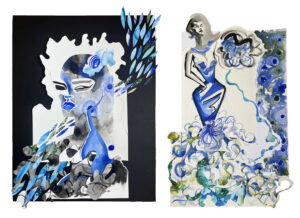
Consider the student who gained the offer from London College of Fashion. I first met her and her
parents in a London hotel when she was a shy 12-year-old, cautiously showing me drawings of
characters in sparkly ball gowns. 7 years later, I see a very different person: a confident, thoughtful
and creatively assured young woman with a deeply imaginative, philosophical and highly
distinctive visual identity. Through years of experimentation, reflection and growth, she has
developed a theatrical, surreal and uniquely personal creative voice. I can easily imagine her
becoming a successful art director, shaping campaigns for leading global brands or directing music
videos for major recording artists. In recent months, I have arranged professional practice
meetings for her with industry figures including a photography editor at a leading international
magazine and an established fashion photographer. As one course ends and another awaits, these
conversations provided invaluable insight into the realities of creative practice and helped her
better understand the opportunities and directions that may lie ahead.
Offers, grades and destinations matter, of course. They represent important milestones and
deserved rewards for hard work. Yet the most meaningful aspect of the year remains the process
itself: helping young people navigate uncertainty, discover new possibilities and build confidence in
their abilities and ambitions. The results are gratifying. The journeys are unforgettable. As with our
clients, and as with my own work, the journey is its own reward.